




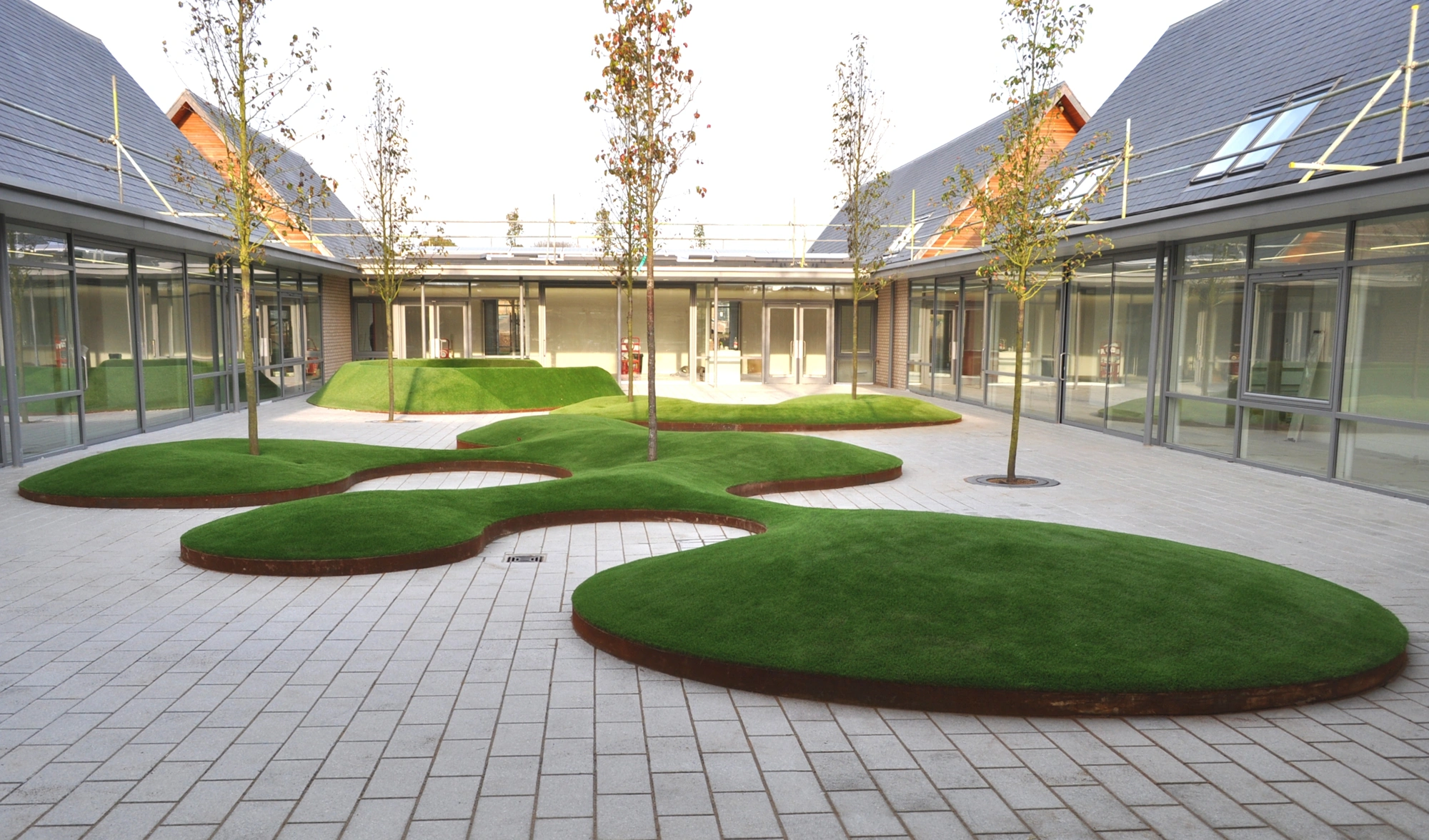
What is weathering steel?
Weathering steel refers to a range of steels with a chemical composition that makes them more resistant to atmospheric corrosion compared to other mild steels. The steel forms a protective layer on its surface under the influence of outdoor weather conditions. CorTen is an example of a weathering steel.
The original weathering steel was developed and patented in 1933 by U.S. Steel under the brand name Cor-Ten®, deriving its name from “CORrosion Resistance” and “TENsile Strength.”
It was later standardised as a product by the American Society for Testing and Materials (ASTM).
In more recent years, “CorTen” has become a general term used to describe both Cor-Ten® and other weathering steels. In general, all weathering steel grades offer comparable corrosion resistance and share a similar look and feel.
CorTen was originally developed for railroad coal wagons but soon became popular in construction due to its structural strength and low maintenance requirements.
By the 1950s and 60s, its strength and industrial aesthetic made CorTen a favoured material for artistic and sculptural projects. Today, one of the largest users of CorTen is the shipping container industry.
The original CorTen steel was ASTM A242, commonly known as Type 1 and Type 2 — or CorTen A and CorTen B.
In Europe:
At Kinley, we work with all types of Cor-Ten and weathering steel at our in-house Innovation Centre in East Sussex to manufacture our edging systems.
Weathering steel undergoes a hot-rolling process during production, where the steel is passed between rollers at very high temperatures. During this process, iron waste material (known as mill scale) moves to the surface. This causes rust runoff and staining in the early stages of weathering.
Once the outer layer has rusted away, the surface stabilises with minimal shedding or staining. This process can be accelerated, or the raw steel can be pickled—treated with acid to remove the mill scale before delivery.
CorTen steel adapts to its surroundings, and its final appearance depends on the environment where it is installed.
For example, steel will weather differently in coastal areas compared to inland locations or areas beneath tree cover. The beauty of CorTen lies in its natural inconsistencies.
However, water pooling or puddling can negatively affect the appearance and reduce the lifespan of the material, so this must be considered during design and installation.
As the steel ages, it will darken in colour.
Example of how the colour can change over time (Source: The Nippon Steel Corporation).
We offer edging products in untreated steel (ideal for tighter budgets) as well as genuine Cor-Ten for premium project finishes.
Unless you're a metallurgist, it’s very difficult to tell the difference between mild steel and weathering steel before the weathering process begins.
All CorTen and weathering steels can be supplied with a material certificate confirming authenticity. Any steel stockholder with CE (BS EN 1090-2) approval will be able to provide this documentation.
.webp)
.webp)
Get in touch with us today!