




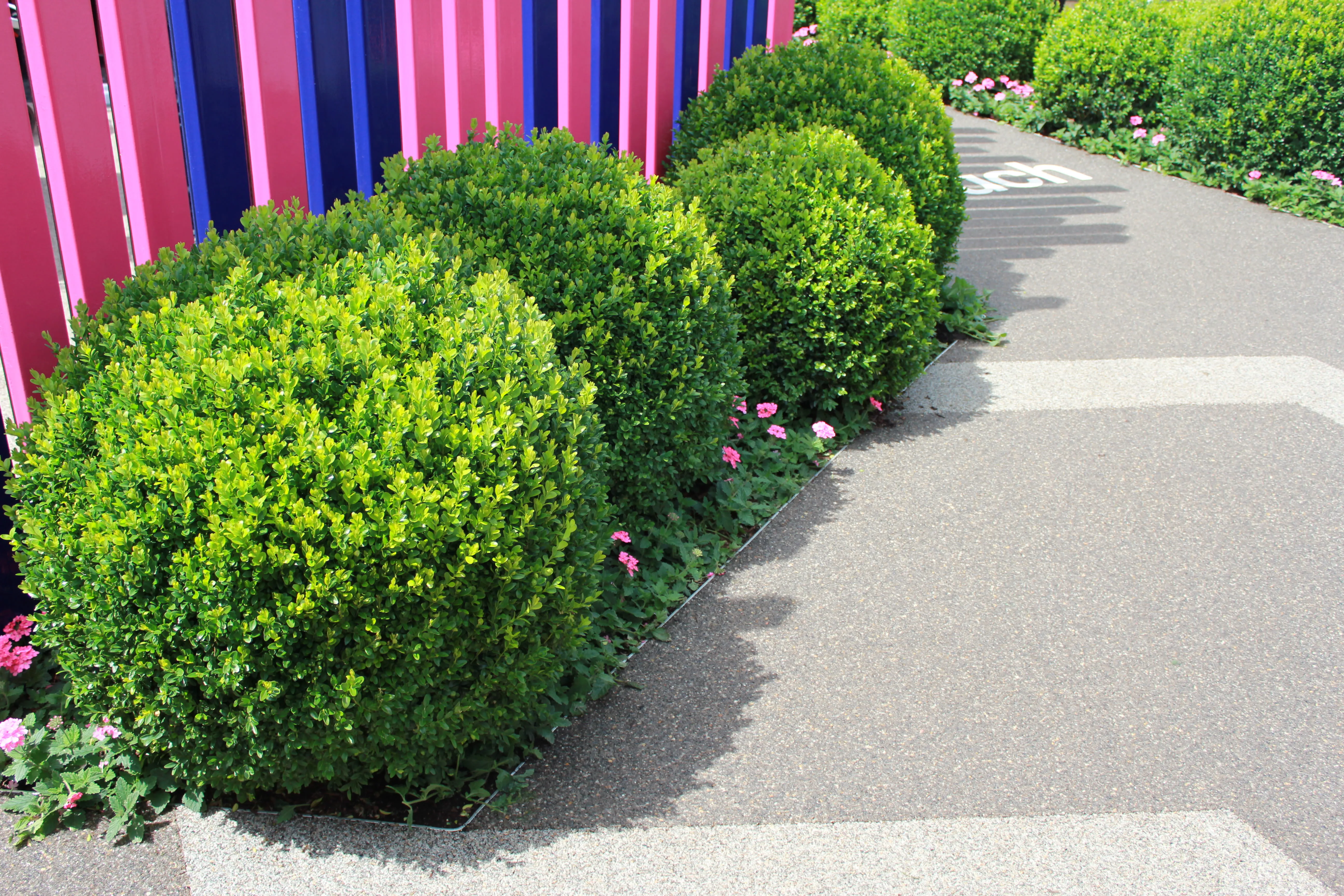
The ever-tightening regulations and standards, along with the UK’s substantial population growth, mean architects and property designers must design urban spaces with energy efficiency and sustainability at the forefront. Through the integration of resilient and sustainable design strategies, landscape architecture plays a vital role, as Sol Russell, Specification Team Leader at Kinley, writes.
While the UK’s decarbonisation journey continues apace, the frequent population rise – the year to mid-2024 saw a 755,300 increase to an estimated 69.3 million people – is bringing with it an increase in energy consumption, vehicles and industrial activity.
Alongside that, the reduced green space and expansion of cities risk air quality falling below World Health Organisation (WHO) guidelines. In fact, the UK is seeing heightened water, air and waste pollution in addition to the urban heat island effect.
As a result, architects and landscape designers must identify other ways of creating more liveable urban environments through effective landscape design.
Improved air quality and wellbeing
While many urban areas, such as Birmingham, London and Manchester, are seeing long-term reductions in PM2.5, PM10 and other particulate matter, reports suggest many are still exceeding WHO guidelines for air quality.
Utilising a biophilic approach during landscape design offers landscape designers and architects the opportunity to significantly enhance air quality.
For instance, the delineation and strategic planting of vegetation can help create a green screen between pollution sources. The trees and vegetation additionally act as filters, trapping particulate matter from the air and absorbing pollutants and carbon dioxide from the atmosphere.
Furthermore, well-placed vegetation can have a long-standing, positive impact on the urban heat island effect. The provision of shade and maximisation of green space cools nearby surfaces, helping to lower local building air conditioning costs by as much as 50%.
Creating habitats and enhancing biodiversity
With urban or developed areas gradually seeing less green space, the utilisation of landscape edging to create wildlife corridors can encourage the easy movement of species and genetic diversity spread. Additionally, linking up existing hedgerows or green spaces helps create interconnected habitat networks.
By operating as a buffer zone, landscape edging protects more intensive habitats from pesticide spray drift, fire, wind and even human disturbance.
The incorporation of sustainable materials into landscape design also enables designers and architects to enhance an urban space’s environmental performance. Alongside requiring less energy to produce, aluminium landscape edging and other materials are manufactured with less toxicity and mitigate the urban heat island effect.
The regulation of local temperatures
The definition of boundaries of various landscape elements aids landscape designers in the regulation of temperatures. For instance, aluminium landscape edging maintains defined areas for features such as trees and water, both drivers of cooling through shading and evapotranspiration.
By delineating green spaces and preventing fragmentation, they can remain compact and ensure more consistent and reliable cooling effects.
The strategic placement of garden boundaries and vegetation also plays a pivotal role. For example, the arrangement of plants and other vegetation in wind corridors can optimise convection efficiency to dissipate heat more effectively.
Community engagement
With the UK’s cultural and social needs ever-evolving, landscape design must roll with the changes; implementing a holistic, forward-thinking approach that focuses on community and integrates biophilic demands.
Through multi-functional design, urban spaces are able to cater for a wide range of activities, from urban agriculture through to recreational and community events – ensuring they remain well-used and popular.
Safe and accessible green spaces, able to be used by every member of the community, can also be ensured through the incorporation of diverse seating options and accessible and wide paths.
Providing such an aesthetically pleasing and accessible space encourages a sense of ownership and pride in the local community. Consequently, residents and visitors are keener to undertake regular care and maintenance to keep spaces beloved and biodiverse.
With average UK temperatures rising and urban development increasing, utilising green spaces to reduce the urban heat island effect and provide inviting and cooling environments has never been more critical.
As specialised and experienced landscape edging manufacturers, Kinley work closely with clients across the UK to create sustainable and aesthetically pleasing urban spaces.
%20(1).png)

Get in touch with us today!