




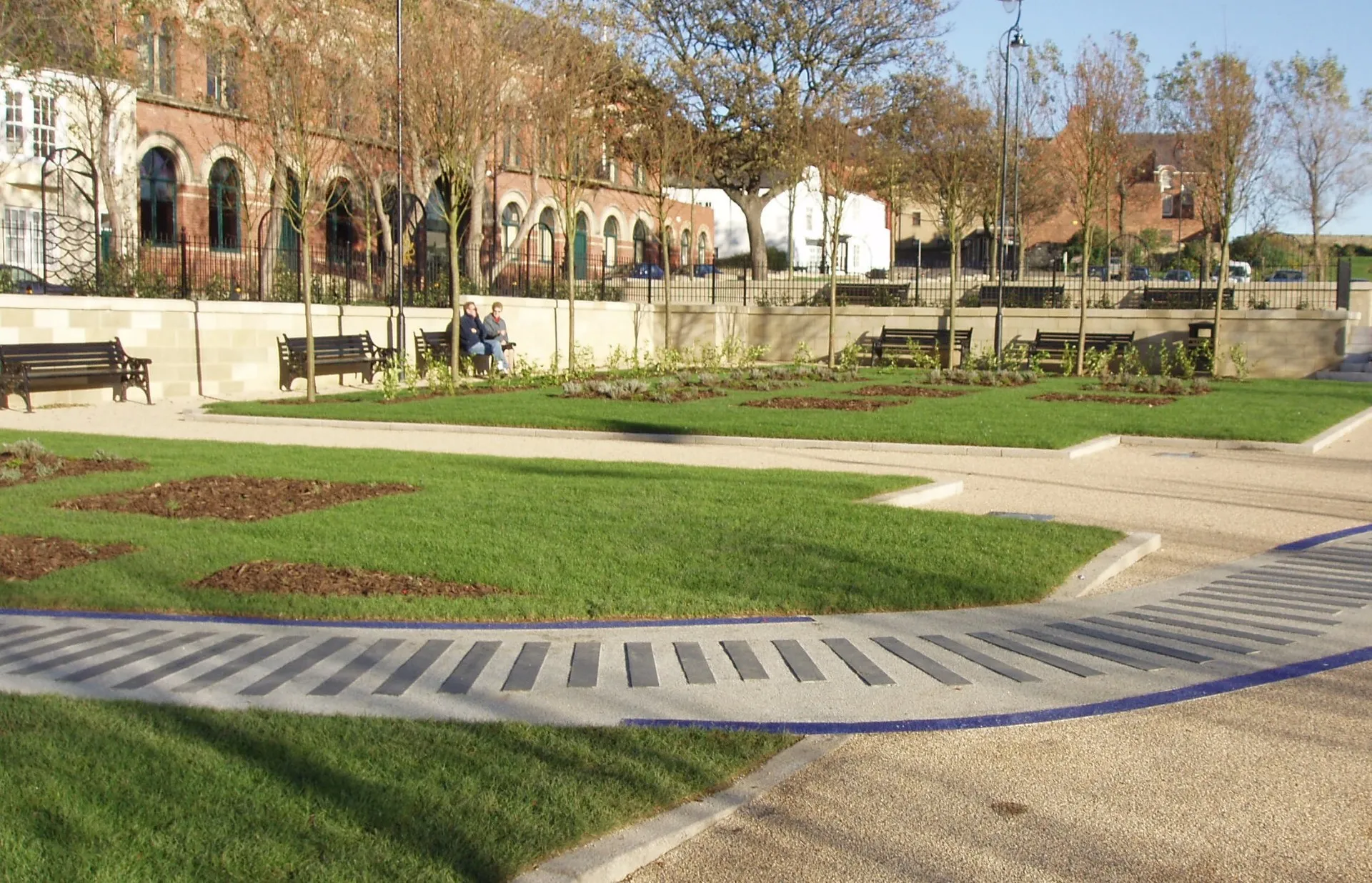
Around two in three people visit green and natural spaces every fortnight. Yet, many still avoid them. The common barriers? A lack of accessible facilities and living in deprived areas. Landscape designers have a key role to play here. Creating spaces that meet the strictest inclusive design standards can open up the outdoors to everyone.
Urban green spaces serve a vital role in offering residents and visitors attractive areas in which to socialise, participate in community events, unwind and connect with nature.
However, accessibility challenges mean some UK residents miss out on the mental and physical benefits of visiting parks, gardens and other natural attractions.
Ultimately, this needs to change. Especially with King’s College London research revealing urban dwellers are 20% more likely to develop depression than those living outside cities.
We therefore cannot overstate the importance of improving accessibility in landscape architecture.
In fact, it’s never been more important for landscape architects and urban designers to provide visitors of all ages and abilities a safe, welcoming and inclusive environment.
Key inclusive design principles
With designing accessible and welcoming green spaces and landscapes imperative if landscape designers and architects are to ensure regulatory compliance, here are five inclusive landscape design principles you need to know.
1. Flexibility and adaptability
Identifying a balance between active and passive use is essential.
For instance, active, high-energy areas such as playgrounds should be placed away from passive, quiet areas meant for rest and relaxation.
Additionally, green spaces will need to be designed to serve multiple purposes, whether that’s the quiet appreciation of nature, reflection or social gatherings.
Ultimately, urban designers and landscape architects will need to ensure a wide variety of spaces, such as large parks and smaller ‘doorstep’ parks, are provided across the urbanised area to make sure they are within short walks from residential areas or public transport.
2. Safety and security
With safety and security often being significant factors in those deciding to avoid visiting urban green spaces, identifying ways in which landscaping can be utilised to ensure clear visibility and sight lines and provide greater peace of mind for those in the garden or park is critical.
By maintaining good sight lines, landscape designers can reduce the fear of crime among visitors and improve personal safety.
Additionally, replacing high, restrictive barriers with planting or soft landscaping can create more welcoming borders and barriers.
3. Accessible pathways
For many less-abled individuals, visits to urban green spaces can often be daunting. Especially if the pathways aren’t well-maintained or designed to accommodate users of all ages and abilities.
With that in mind, landscape architects and urban designers must look to incorporate non-slip and non-glare surfaces into their landscape design.
By providing slip-resistant and stable pathways that accommodate scooters, wheelchairs and families, accessibility will be enhanced and inclusive design standards will be met.
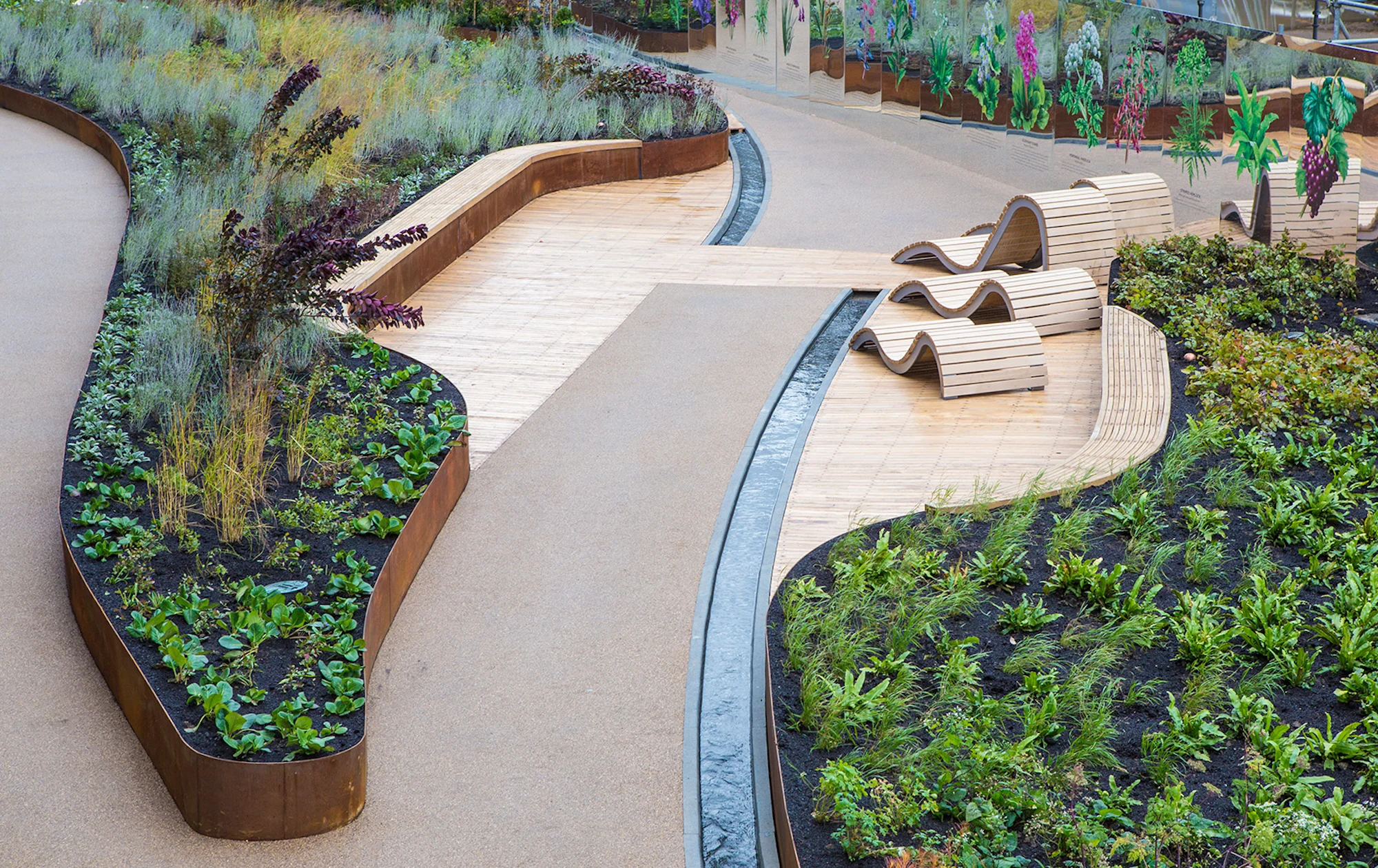
Furthermore, the specification and installation of reliable and durable landscape edging, such as Kinley’s Fort steel edging, ensures structural integrity, contains loose materials and prevents erosion or waterlogging while creating a stunning aesthetic.
The implementation of varied seating options, such as Kinley’s stunning wooden benches, should also be a major consideration during the design phase.
Giving all visitors more opportunities to sit, relax and socialise with others will increase the likelihood of regular visits and enhance the space’s attractiveness and accessibility.
4. Easy navigation
By removing psychological, sensory and physical barriers, inclusive landscape design can crucially enhance navigation for any visitors – regardless of age or ability.
Going far beyond standard accessibility, it can create welcoming and intuitive environments that integrate clear layouts and multi-sensory cues.
For example, providing clearly signposted and predictable pathways ensures that individuals with mobility issues can freely navigate through the space. Additionally, the strategic placement of benches boosts confidence and allows users to take breaks.
Well-designed spaces also enable the clear definition and separation of pedestrians and cyclists. This prevents navigator chaos and ensures safer and more predictable movement.
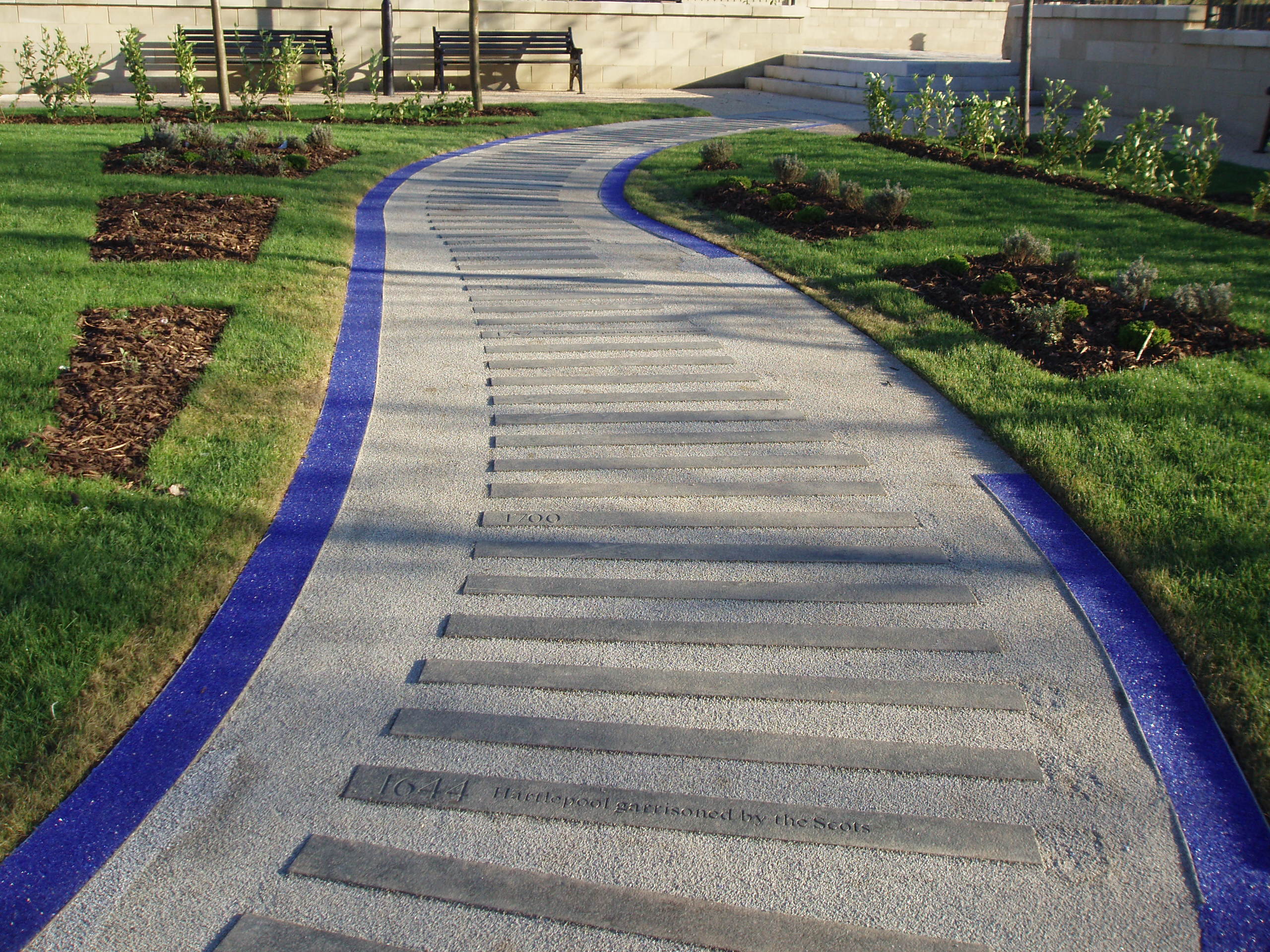
This is where the delineation of boundaries through the implementation of border edging, such as Urban border edging, plays a vital role.
Separating paths from surrounding lawns or garden beds, guides pedestrian flow while improving safety and preventing soil, grass and weeds from encroaching onto the path.
5. Long-lasting durability
With the safety of all users a vital aspect of inclusive and safe public landscape design, the specification and installation of durable and hard-wearing materials must take priority. For instance, utilising durable and sustainable materials that can withstand weathering and high foot traffic will ensure longevity while reducing the need for regular maintenance and the potential disruption this can cause.
Similarly, the long-lasting nature of the material will minimise the risk of cracks forming or uneven surfaces being created. Not only will this reduce the risk of falls and injuries, it will also ensure the green space remains aesthetically pleasing and welcoming.
Ensuring BS 8300 compliance
Following the restructure of BS 8300 into two parts, BS 8300-1:2018 focuses on the promotion of good practice design principles to ensure landscaped areas, parks and green spaces are inclusive and able to meet the needs of all who use them – not just those less able.
One of the key aspects of the updated regulations is to ensure the journey from parking or public transport to the entrance of a building – identified as the approach to a building – is safe and seamless.
For example, paths and walkways must be designed to be wide enough, sturdy, safe and barrier-free. Additionally, the use of contrasting surfaces to aid visually impaired users is critical.
Street furniture, such as bollards and benches, must be correctly positioned and paths must not be blocked by trees and planters.
With the standards providing a more comprehensive and detailed code of practice that encompasses the entire external built environment, it is essential that landscape designers and architects utilise the most trusted and proven materials and products to ensure compliance.
As Kinley’s flagship edging, AluExcel is manufactured from the durable aluminium grade 6005A. Consequently, it is recognised as the highest quality aluminium edge by specifiers, installers and designers.
Rust-resistant, featuring a strong and stable base and tapered top edge, entirely adaptable and able to work between all hard and soft surface types, AluExcel is the ideal choice for commercial landscape design projects that want to prove compliance to even the most stringent of inclusive design standards.
Green spaces provide wonderful opportunities for people to connect with nature, spend time with others to reduce social isolation and simply relax and unwind in peaceful and calming settings.
To that end, combating the challenge of accessibility and inclusivity and creating more welcoming and inviting environments through effective landscape design shouldn’t simply be a consideration, but a necessity.
.webp)
Get in touch with us today!